When Suresh's mother was discharged from the hospital after her stroke, the discharge summary listed three referrals: physiotherapy, occupational therapy, and speech therapy. He understood physiotherapy, broadly. The other two were unfamiliar. The hospital had handed them a stack of papers, wished them well, and sent them home.
In the weeks that followed, Suresh's mother received some physiotherapy. The speech therapy never happened, he wasn't sure who to call. The occupational therapy referral sat in the folder, untouched. She could walk a little, but she couldn't button her blouse. She could speak, but swallowing had become difficult. Small things that weren't visible on any scan had quietly changed her daily life.
This happens more than it should. Not because families don't care, but because no one has explained what each type of rehabilitation actually does and why missing one of them means the patient's recovery is incomplete. This guide changes that.
The three main types of rehabilitation therapy are physical rehabilitation, occupational rehabilitation, and speech rehabilitation. Each one addresses a different dimension of what illness, injury, or surgery takes from a patient. Together, they form a complete recovery programme.
Physical rehabilitation also called physiotherapy is the most widely recognised of the three types. It focuses on restoring movement, strength, balance, and the body's ability to function physically.
After a stroke, a hip replacement, a spinal surgery, or a prolonged hospitalisation, the body loses ground fast. Muscles weaken. Joints stiffen. Balance becomes unreliable. The nervous system's connection to the limbs may need to be retrained.
Physical rehabilitation addresses all of this through targeted exercises, manual therapy, gait training, strengthening programmes, and carefully structured movement. The goal is not just to reduce pain though it does that too. The goal is to restore the patient's physical ability to do what their daily life requires.
A physiotherapist begins with an assessment of the patient's current strength, range of motion, balance, and functional capacity. From there, sessions are built around a personalised rehabilitation plan, progressing week by week as the patient's body responds. No two patients with the same diagnosis follow the same plan, because no two patients start from the same place.
For post-stroke patients, physical rehabilitation is particularly time-sensitive. The brain's neuroplasticity, its ability to rebuild the connections that the stroke damaged is highest in the first three to six months after the event. Intensive, structured physiotherapy in this window consistently produces better outcomes than delayed or infrequent care.
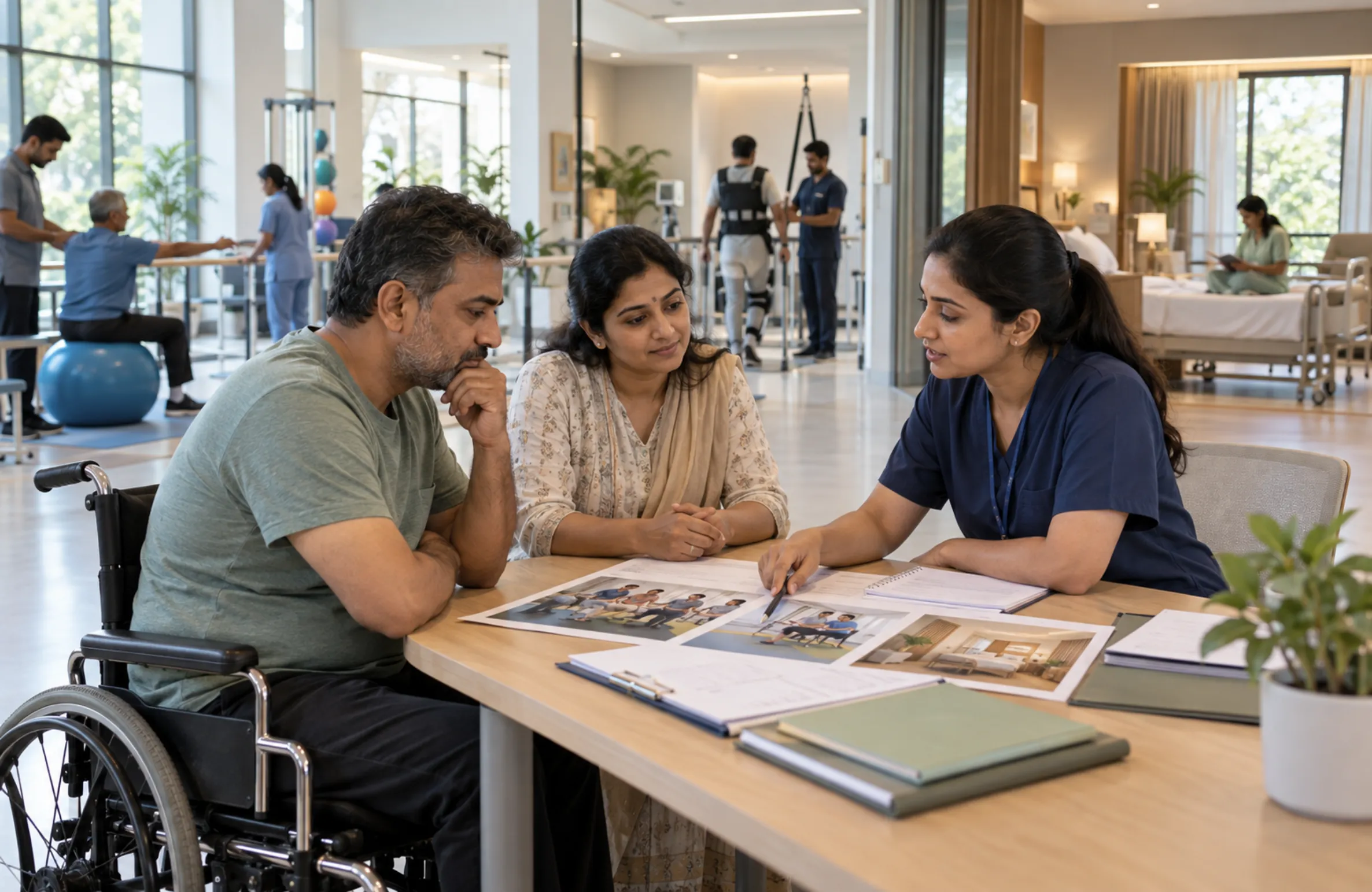
Occupational rehabilitation is the type that most families don't fully understand until they see what happens without it.
It does not train the patient for a job, despite what the name might suggest. Occupational therapy addresses the patient's ability to perform the activities of daily living, the specific, practical things that make up an ordinary day. Dressing. Bathing. Preparing a meal. Managing medication. Writing. Using a phone. Climbing into a car.
These are things most healthy people do without thinking. After a stroke, a traumatic brain injury, or a serious illness, they can become genuinely difficult or impossible even when the patient can walk. Physical rehabilitation restores movement. Occupational rehabilitation restores the ability to use that movement to live.
Consider a 65-year-old man recovering from stroke. His physiotherapist has helped him walk the length of the corridor without a walker. But at home, he cannot make his morning tea, the sequence of steps is gone. He cannot zip his jacket. He drops things. He won't tell his family he's afraid to shower alone.
This is where occupational rehabilitation begins. The occupational therapist assesses what specific functions have been disrupted, physical, cognitive, and sensory and works with the patient to rebuild them, one task at a time, in a realistic, functional setting. By the time this patient is discharged, he is not just walking. He is living.
Speech rehabilitation, more fully called speech-language therapy, is the third type, and the one most commonly overlooked by families navigating a post-hospital discharge.
The name leads families to assume it is for people who cannot speak. In reality, speech rehabilitation covers a much wider range of functions including some that are medically urgent.
Swallowing is one of them. After a stroke or certain neurological events, the muscles that control swallowing can be affected. This is called dysphagia, and it is more dangerous than it sounds. A patient who aspirates food or liquid who silently inhales particles into the lungs instead of swallowing them safely, is at high risk of aspiration pneumonia, a serious and potentially life-threatening complication. A speech therapist identifies swallowing problems, assesses their severity, and works with the patient on exercises and safe feeding strategies.
Why speech rehabilitation matters for stroke patients: After a stroke, up to 40% of survivors experience some form of communication difficulty. For families, this is one of the most emotionally distressing aspects of the recovery, watching a sharp, articulate person struggle to find a word they used every day. Speech therapy does not just restore the mechanics of language. It rebuilds confidence, reduces frustration, and reconnects the patient to the people around them. That restoration has direct effects on emotional recovery and overall rehabilitation outcomes.
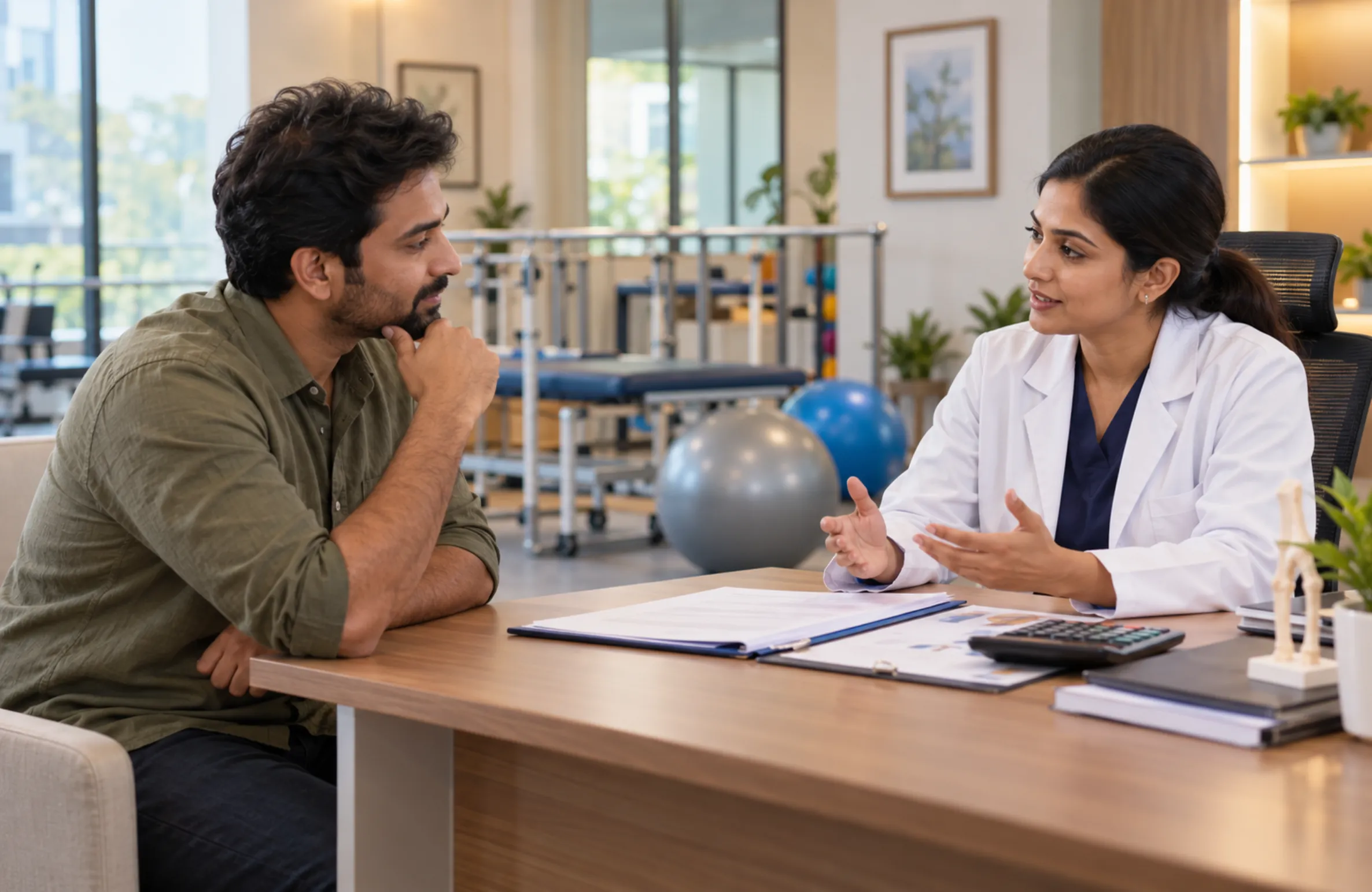
Here is what makes this important for families to understand: these three types of rehabilitation are not alternatives to each other. For many patients, particularly those recovering from stroke, brain injury, serious illness, or major surgery, all three are needed simultaneously.
A patient recovering from stroke may need physical rehabilitation to restore walking and strength, occupational rehabilitation to restore the ability to dress and manage daily tasks, and speech rehabilitation for communication and safe swallowing. Missing one of the three does not just slow recovery in that area, it limits the overall outcome.
The most effective rehabilitation programmes address all three dimensions from the start, with a coordinated team that communicates across disciplines and reviews the patient's progress together. This is what multidisciplinary rehabilitation means in practice, not just several therapists in the same building, but a team working from a shared understanding of where the patient is and where they need to go.
Research consistently confirms that team-based, multidisciplinary rehabilitation produces better outcomes than single-discipline care, higher rates of functional recovery, greater independence, and lower rates of readmission and long-term complications.
While physical, occupational, and speech rehabilitation are the three core types, comprehensive rehabilitation programmes often include additional disciplines that strengthen the overall outcome.
After illness or surgery, the body's ability to rebuild muscle, repair tissue, and sustain energy depends heavily on what it is fed. Many post-hospital patients are nutritionally depleted without anyone identifying it. A rehabilitation nutritionist addresses this directly, building a plan that supports the physical work happening in therapy.
Depression and anxiety are clinically common after stroke, serious illness, and prolonged hospitalisation. A patient who is motivated and emotionally supported makes faster progress in physical and occupational therapy. Psychological support is not an optional extra for many patients, it is what keeps the rest of the rehabilitation programme working.
In inpatient rehabilitation, 24-hour nursing is what allows everything else to function safely. Nurses monitor vitals, manage medications, observe for early signs of complications, and provide the continuous care that complex patients require between therapy sessions.
The answer starts with an honest assessment, not a guess based on what seems most obviously affected.
A patient who walks slowly may have the primary need in physical rehabilitation. But if they also cannot sequence the steps to make breakfast, they need occupational therapy too. If they are swallowing differently, or their speech has changed even slightly, speech therapy needs to be part of the plan.
A team that can answer these questions clearly and specifically is a team worth trusting with your family member's recovery.
Back to Suresh's mother. Eight months after her stroke, she lives at home. She makes her own tea in the morning. She reads the newspaper. She video-calls her daughter without needing help to connect. Swallowing is no longer something she has to think about at every meal.
That outcome required all three types of rehabilitation working together, physical therapy to restore her movement, occupational therapy to restore her daily function, and speech therapy to address both her communication and her swallowing. None of them alone would have produced this result.
That is what the three types of rehabilitation, properly understood and properly delivered, can do.
If you're working out what your family member needs after hospitalisation, illness, or surgery, the team at Care Convoy is available to help you understand which types of rehabilitation apply, how they would be structured, and what a full recovery programme looks like in practice.
Physical rehabilitation, occupational rehabilitation, and speech rehabilitation, the three core rehabilitation therapy types that together address movement, daily function, and communication.
Restores movement, strength, balance, and mobility after illness, surgery, injury, or stroke.
Restores the ability to perform daily activities like dressing, bathing, cooking, and managing tasks independently.
Communication difficulties, swallowing problems, voice disorders, and cognitive communication after stroke or brain injury.
Not always. It depends on what functions have been affected. A thorough assessment determines which are needed.
Physical rehabilitation focuses on how the body moves. Occupational rehabilitation focuses on using that movement to live independently.
Weeks for simpler cases. Complex neurological conditions often need several months of consistent, structured therapy.
The team at Care Convoy is available to help you understand which types of rehabilitation apply to your family member, how they would be structured, and what a full recovery programme looks like in practice.
Speak With Our Care Team Today
