Illustrative recovery scenario: Care needs vary for every patient.
The following scenario reflects an experience common to many families navigating TBI recovery.
Karthik was 34 years old when a road accident left him with a severe traumatic brain injury. The neurosurgeon was clear, the surgery had been successful. The brain bleed had been managed. He was stable.
What the family wasn't prepared for was everything that came after stable.
Karthik couldn't remember what he had eaten for breakfast. He couldn't follow a conversation for more than a few minutes. His left side was weaker than his right. He slept for fourteen hours and woke exhausted. He was irritable in ways his wife had never seen. And when he tried to go back to his job two months later, he lasted one morning.
The injury was survivable. The recovery, without the right structure, was not going well.
What someone in Karthik's situation needs is traumatic brain injury rehabilitation. Not just physiotherapy. Not just rest. A coordinated, multidisciplinary programme that addresses every system the injury has disrupted. This guide explains what that programme looks like, why it works the way it does, and why timing is one of the most critical factors in how far brain injury recovery goes.
Explore Traumatic Brain Injury Rehabilitation and personalized rehabilitation services at Care Convoy.
A traumatic brain injury, or TBI, occurs when an external force causes damage to the brain, a road accident, a fall, a sports collision, or a violent impact. The injury can range from mild concussion to severe brain damage, and the consequences vary significantly depending on the location and extent of the damage.
TBI affects people worldwide, and its complex, multifactorial nature can require an integrated, multidisciplinary rehabilitation approach to address the diverse physical, cognitive, behavioural, and psychosocial impairments that follow injury.
The critical thing families need to understand is this: the medical emergency, the bleed, the swelling, the surgical intervention, is only the first chapter. The chapter that determines quality of life is what happens in rehabilitation.
Most recovery programmes address one system. A broken leg needs orthopaedic rehabilitation. A cardiac event needs cardiac rehabilitation. Neuro rehabilitation for traumatic brain injury is fundamentally different because the brain is involved in every system simultaneously.
The brain controls movement, speech, memory, attention, mood, behaviour, swallowing, sleep, and the ability to plan and make decisions. A TBI can affect any or all of these, in any combination, in ways that are not always visible immediately after the injury.
Cognitive impairments are among the most disabling of post-TBI symptoms and typically contribute more to persisting disability than physical impairment. A patient who walks can still be profoundly disabled by what a TBI has done to their thinking, memory, and emotional regulation.
This is why TBI rehabilitation requires a team, not a single therapist, and not rest.
Understanding where the patient is in their recovery helps families know what to expect and what to prioritise at each stage.
Medical stabilisation is the priority. The neurosurgical team manages the immediate emergency. Rehabilitation begins even here, positioning, passive movement, sensory stimulation, and monitoring for early complications.
This can be an important phase of brain injury recovery. According to the National Institute of Neurological Disorders and Stroke, rehabilitation after traumatic brain injury is individualised and typically involves several disciplines working from a shared plan. For some patients, structured TBI rehabilitation during this phase helps build progress. The brain can adapt throughout recovery; the right therapeutic input and timing depend on the patient's medical condition and goals.
Recovery can continue for months or years, at a variable pace. The focus shifts to consolidating gains, building functional independence, and addressing the cognitive, emotional, and social dimensions of life after brain injury. Post-TBI rehabilitation in this phase is about sustaining what has been built and preventing the regression that happens without continued support.
A brain injury rehabilitation programme is a coordinated course of therapy that helps a person relearn movement, thinking, communication, and everyday skills, typically combining physical therapy, occupational therapy, speech-language therapy, neuropsychology, and rehabilitation medicine, delivered as an inpatient, outpatient, or home-based plan.
Here is what each component addresses in practice.
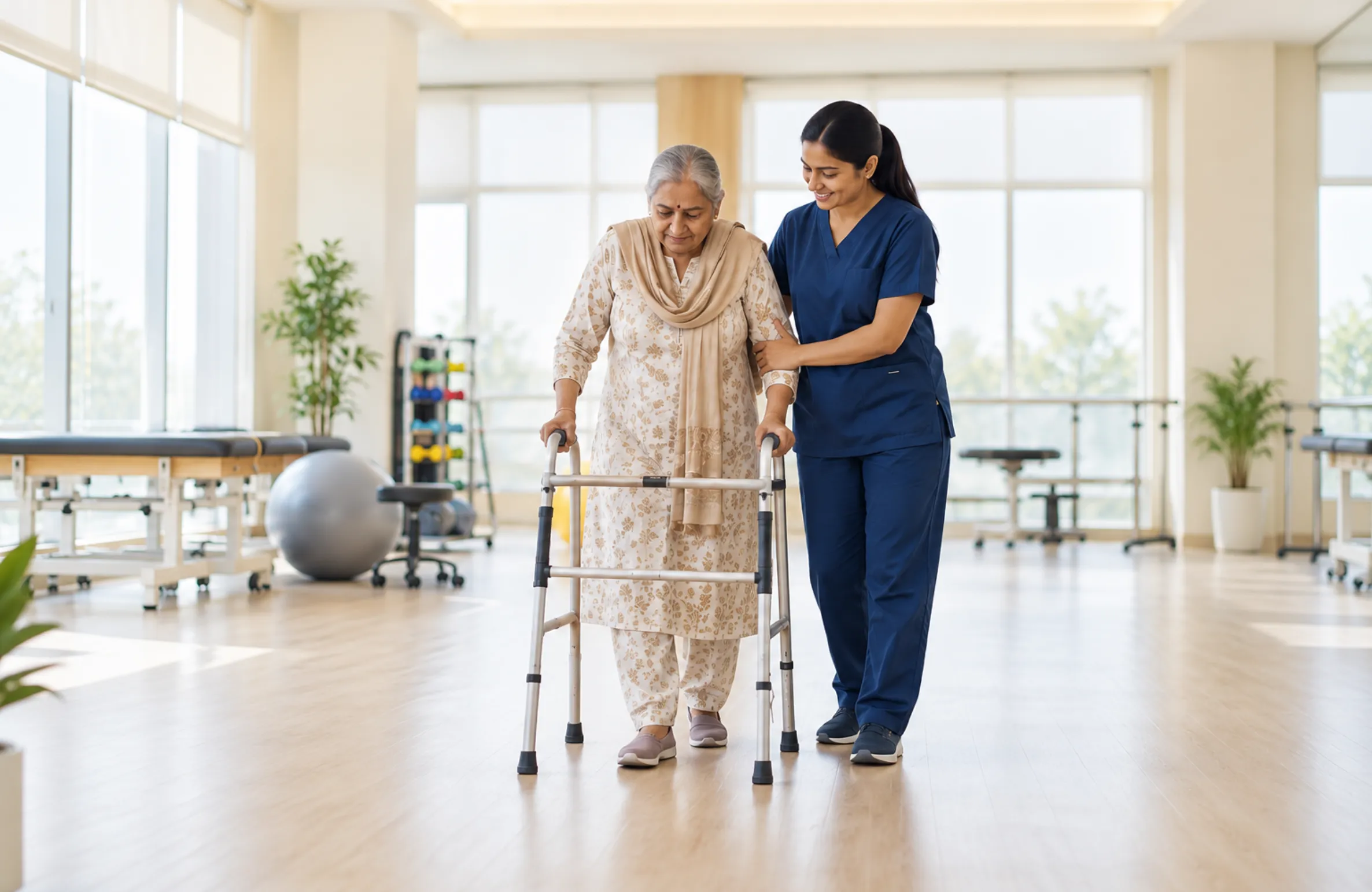
Physical therapy after brain injury focuses on the motor consequences of TBI, weakness, coordination problems, balance deficits, and difficulties with movement. The physiotherapist works on:
For many TBI patients, physical therapy is the most visible component of rehabilitation. It produces the outcomes families can see, the patient walking again, standing independently, moving with more confidence. But it is one part of a much larger picture.
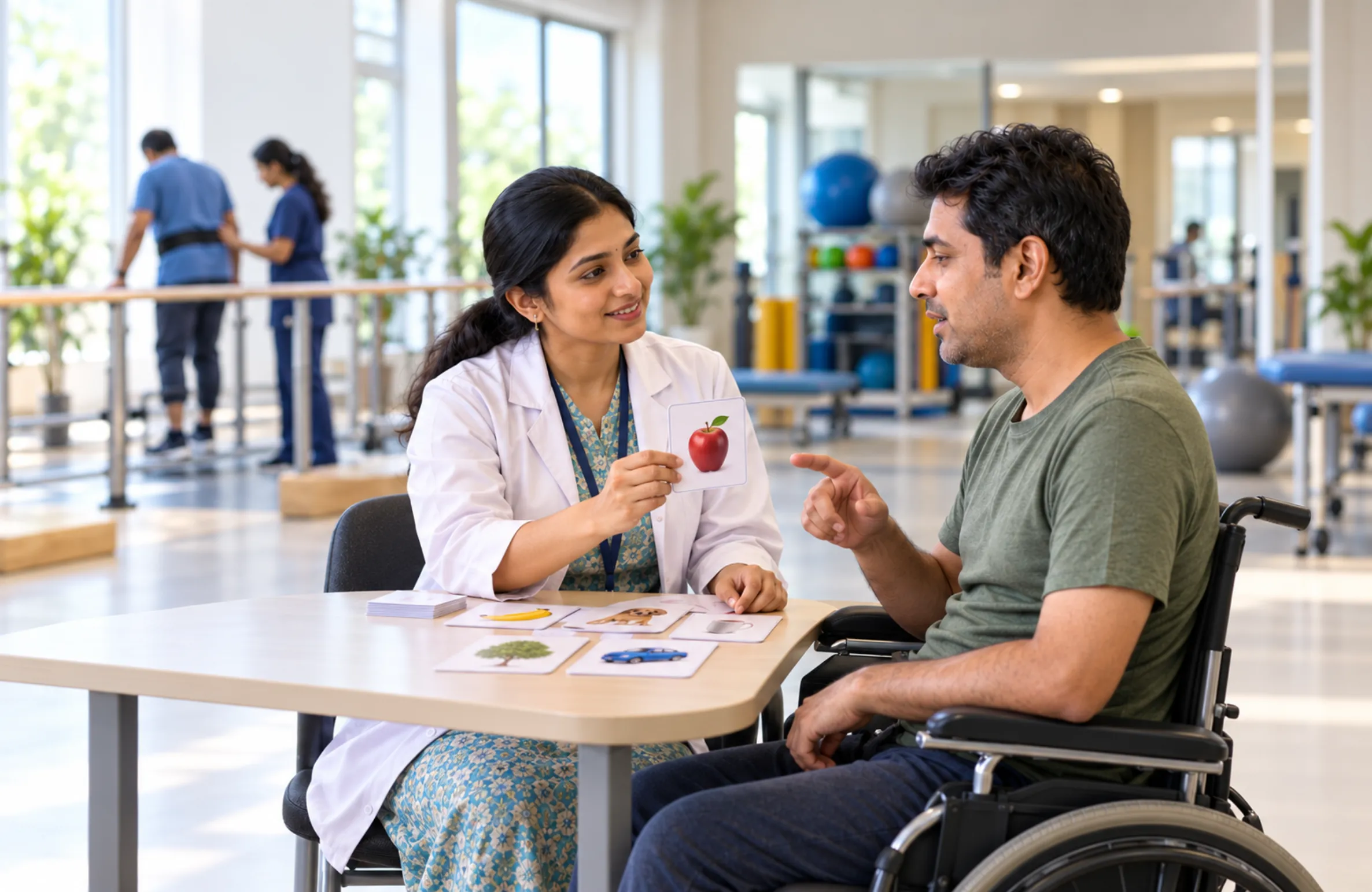
This is the component most families don't know exists until they realise their loved one is struggling with something physiotherapy cannot address.
Cognitive rehabilitation attempts to enhance functioning and independence in patients with cognitive impairments resulting from brain damage and may include interventions that aim to lessen impairments, or interventions that aim to lessen the disabling impact of those impairments.
This work is done through structured cognitive exercises, strategy training, technology-assisted programmes, and real-world task practice. It is slow, methodical, and essential. A patient who cannot sequence a morning routine, follow a conversation, or manage their own medication cannot be independent regardless of how well their physical recovery has gone.
Traumatic brain injury treatment frequently involves speech-language therapy, for reasons that go beyond communication.
After a TBI, speech and language can be affected in multiple ways, the ability to find words, to form coherent sentences, to understand what others are saying, and to organise thoughts into language. For families, this can be one of the most distressing aspects of recovery: the person is present, but unreachable in the way they used to be.
Speech therapy also addresses swallowing disorders, which are common after severe TBI and can be medically dangerous if not identified and managed. A patient who aspirates food or liquid silently, inhaling it into the lungs, is at risk of aspiration pneumonia, a serious complication that structured swallowing assessment and therapy works to prevent.
Post-TBI rehabilitation includes occupational therapy to rebuild what the injury has taken from the patient's daily life, not in clinical settings, but in real-world function.
The occupational therapist works with the patient on:
In situations like Karthik's, the occupational therapist may be the one who identifies that an inability to return to work is not a physical problem, it is a cognitive sequencing problem. That is what occupational therapy in TBI rehabilitation identifies and works to address.
Depression, anxiety, emotional dysregulation, and personality changes are clinically common after traumatic brain injury and they are not simply the patient being upset about what happened. They are often direct neurological consequences of the injury itself.
Addressing behavioural and psychosocial challenges is a critical part of recovery for individuals with moderate-to-severe traumatic brain injury.
A patient who is depressed makes slower progress in every other component of rehabilitation. A patient who is emotionally dysregulated, more impulsive, less patient, more easily overwhelmed, struggles to engage consistently with cognitive and physical therapy. Psychological support is not separate from TBI rehabilitation. It is what keeps the rest of it working.
Families sometimes ask whether rehabilitation can wait, whether the patient should rest more first, whether they need to be further along before they start.
Early assessment can help patients receive appropriate support without unnecessary delays.
Rehabilitation should begin when medically safe, with assessment and therapy tailored to individual needs. Recovery remains possible beyond the earliest period.
The early months may present important rehabilitation opportunities, but there is no fixed deadline after which meaningful improvement becomes impossible. The right start time and intensity are guided by the treating team.
Starting rehabilitation early does not mean pushing the patient harder than they can manage. It means beginning the structured, supervised process of rebuilding, at the right pace, with the right team, at the moment the brain is most ready to respond.
For families in Hyderabad navigating TBI recovery, the choice of rehabilitation setting matters significantly. A neuro rehabilitation centre in Hyderabad providing genuine TBI care should offer:
At Care Convoy, neurological rehabilitation is delivered through a coordinated team, physiotherapy, occupational therapy, speech therapy, cognitive rehabilitation, nursing, and nutrition, working from a shared understanding of where the patient is and what they need next.
If your family member has experienced a traumatic brain injury and you are working out what rehabilitation involves, the team is available to help you understand the options and what the right programme looks like for your specific situation.
A coordinated programme of therapy addressing the physical, cognitive, communication, and emotional effects of a TBI.
Physical therapy, cognitive rehabilitation, speech therapy, occupational therapy, psychological support, and nursing care, as a coordinated team.
As early as the treating team considers medically safe and appropriate, based on the patient’s condition.
Structured therapy targeting attention, memory, executive function, and processing speed.
No. Physical therapy addresses motor function. Cognitive, speech, and occupational rehabilitation address the other systems TBI affects.
To provide specialist, multidisciplinary TBI rehabilitation under medical supervision during the critical early recovery phase.
Mild TBI may resolve in weeks. Moderate to severe TBI typically needs months of structured rehabilitation, with ongoing support as required.
Yes. With structured cognitive rehabilitation started early, many patients see meaningful improvement in attention, memory, and daily function.
Medical information: This article is educational and does not replace individualized advice from a treating clinician. Rehabilitation intensity and timing depend on medical assessment.
Speak with the Care Convoy team to understand suitable rehabilitation options and a personalized plan for your loved one.
Speak With Our Care Team Today
