Illustrative recovery scenario: Care needs vary for every patient.
When Ananya's father came home after a bypass surgery, the cardiologist had given two referrals. One said physiotherapy. One said rehabilitation. Ananya assumed they were the same thing. She booked a physiotherapist who came home three times a week, and left it at that.
Three months later, her father could walk to the kitchen and back. But he couldn't manage his medications without help. He avoided the stairs entirely. He had stopped talking much, and the family had put it down to tiredness. Nobody had assessed his cognitive function. Nobody had looked at his nutritional status. Nobody had connected the fatigue to what he was eating or not eating.
The physiotherapy was correct. It just wasn't complete.
Understanding the difference between physiotherapy and rehabilitation isn't a technicality. It is a decision that directly shapes how far and how fully someone recovers.
Explore Physiotherapy vs Rehabilitation and personalized rehabilitation services at Care Convoy.
The confusion between physiotherapy and rehabilitation is one of the most common ones families face and it's understandable, because the two overlap significantly. But they are not the same thing. The distinction matters, particularly for patients with complex conditions.
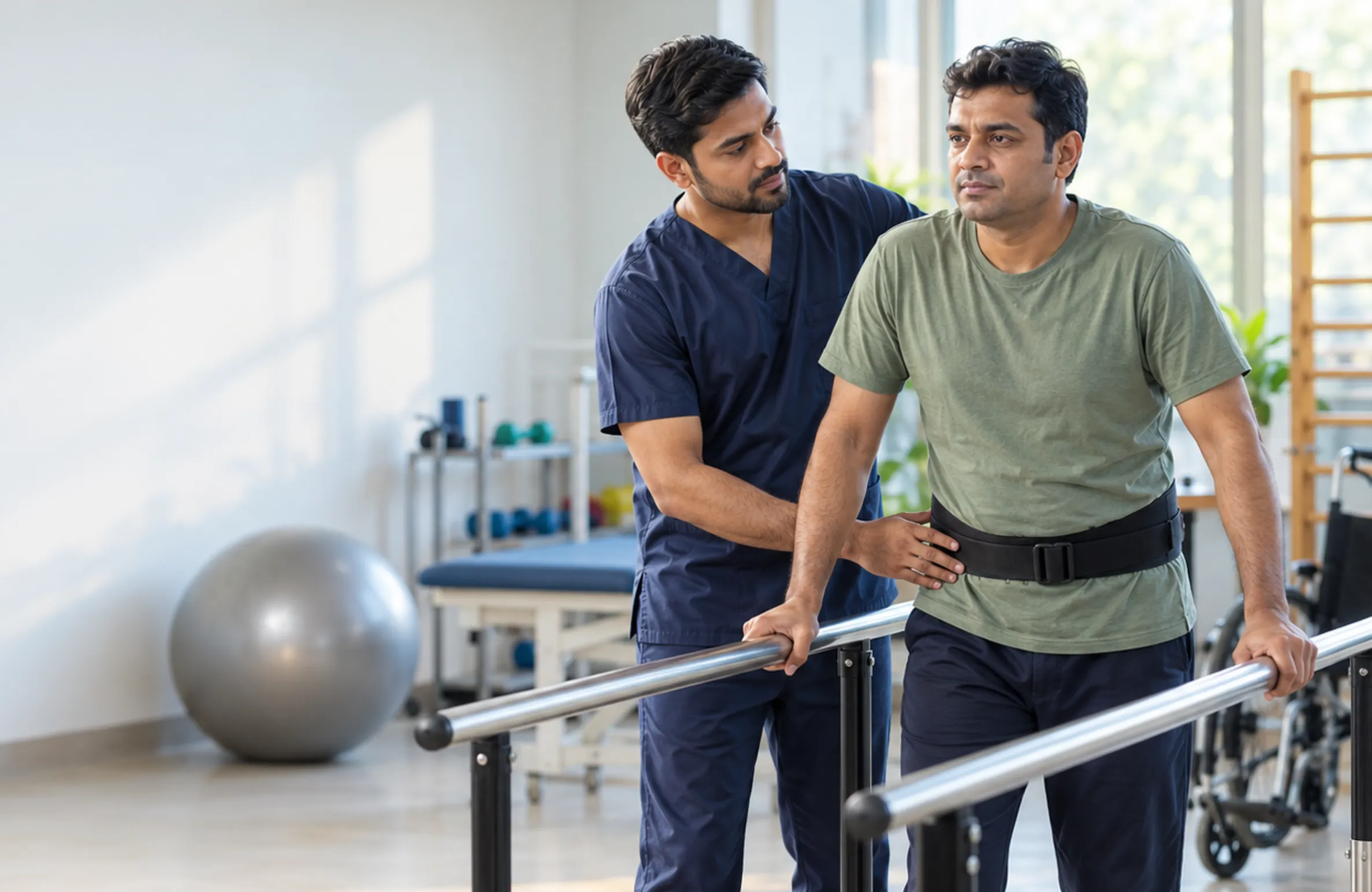
Physiotherapy is a clinical discipline focused on the physical body like movement, strength, balance, joint mobility, and pain management. A physiotherapist works with the patient on exercises, manual therapy, and techniques designed to restore physical function. It is specific, targeted, and delivered by a physiotherapy specialist.
Rehabilitation is the broader system that physiotherapy sits inside. It encompasses the entire process of restoring a patient's physical, mental, and emotional wellbeing after an illness, injury, or surgery, integrating physiotherapy alongside occupational therapy, speech therapy, and other disciplines into a coordinated whole.
The clearest way to understand the relationship: physiotherapy is a discipline. Rehabilitation is a programme. Rehabilitation is multidisciplinary, led by a doctor who specialises in rehabilitation, who sets realistic goals after examining the patient. A physiotherapist is one important part of that team.
Most families assume that if someone is receiving physiotherapy, they are in rehabilitation. That assumption causes real gaps in recovery.
Physiotherapy focuses on one system: the physical body. Rehabilitation addresses the full range of what illness or injury disrupts, physical function, daily independence, communication, nutrition, cognition, and emotional health.
A patient who can walk after a stroke but cannot button their shirt, follow a conversation, or manage their own medication has received physiotherapy. They have not received rehabilitation. The gap between those two outcomes is significant and it is exactly where full rehabilitation therapy makes its difference.
This is the line: physiotherapy restores movement. Rehabilitation restores life.
Physiotherapy treatment addresses the physical systems of the body and the range of what it treats is wide.
Physical therapy treats conditions including sports injuries, neck and back pain, knee and hip pain, strokes, spinal cord injuries, traumatic brain injuries, and chronic conditions including multiple sclerosis, Parkinson's disease, and COPD.
In a physiotherapy session, the therapist begins with an assessment of the patient's strength, range of motion, balance, and physical capacity. From there, a personalised plan is built, exercises, manual techniques, joint mobilisation, gait training, and progressive strengthening, adjusted as the patient responds and progresses.

For many post-surgical and post-illness patients, appropriately timed physiotherapy can support recovery when the treating team considers it safe. The body loses ground quickly during inactivity and physiotherapy is what begins to reverse that.
This is the part most families don't discover until something goes wrong.
Physiotherapy restores physical movement. Rehabilitation therapy addresses everything else recovery requires.
While physiotherapy addresses specific physical conditions, rehabilitation seeks to comprehensively re-establish functioning abilities. The distinction lies in physiotherapy's focus on pain reduction and physical improvement, while rehabilitation targets overall recovery and quality of life.
A patient recovering from stroke, for example, may regain basic movement through physiotherapy. But if they cannot speak clearly, cannot sequence the steps to dress themselves, are nutritionally depleted, or are experiencing the depression that affects a significant proportion of stroke survivors, physiotherapy alone has not addressed their recovery. Rehabilitation therapy has.
There are several types of rehabilitation depending on the patient's condition and what functions have been affected.
Physical rehabilitation is the foundation, rebuilding movement, strength, and mobility. This is where physiotherapy treatment sits.
Neurological rehabilitation addresses conditions of the brain and nervous system, stroke, traumatic brain injury, Parkinson's, multiple sclerosis, spinal cord injury. It requires specialist knowledge of how the brain rebuilds and adapts after damage.
Orthopaedic rehabilitation follows surgery or injury, hip and knee replacements, fractures, spinal procedures, restoring joint function and safe movement.
Cardiac rehabilitation supports heart patients in safely rebuilding stamina and physical function after cardiac events or surgery.
Geriatric rehabilitation addresses the specific, simultaneous challenges of recovery in elderly patients, multiple conditions happening at once, faster deconditioning, and the need for fall prevention, gait training, and rebuilding confidence in movement.
Each of these types of rehabilitation includes physiotherapy as a central component and adds the additional disciplines that the specific condition requires.
The answer depends on what the illness, injury, or surgery has taken from the patient and whether that is limited to physical function, or extends to other systems.
If recovery requires more than just physical function,if there are speech problems following a stroke, emotional difficulties, or the need to relearn daily tasks, full rehabilitation is required, and physiotherapy forms one core component of that care.
The following scenario reflects an experience common to many families navigating post-surgical recovery.
Ananya's father had received physiotherapy diligently. When the family eventually connected with a rehabilitation centre in Hyderabad, the clinical assessment found what the physiotherapy alone had not addressed. His nutritional status was significantly depleted. His cognitive function had shifted, he was struggling with sequencing, not tiredness. His confidence in movement had reduced his activity further than his physical capacity required.
A coordinated plan was built. The physiotherapy continued. An occupational therapist worked on daily tasks and confidence. A nutritionist built a specific plan. A physician monitored his cardiac status throughout. Over time, with consistent, coordinated support, the progress that had stalled began to move again.
This is what physiotherapy and rehabilitation working together can support.
If your family member needs more than physiotherapy alone, these are the indicators of a rehabilitation centre in Hyderabad worth choosing:
At Care Convoy, Hyderabad, the team is available to help families understand whether physiotherapy alone addresses their family member's needs or whether structured inpatient rehabilitation is what the recovery actually requires.
Physiotherapy targets physical function. Rehabilitation is broader, it includes physiotherapy alongside occupational therapy, speech therapy, nutrition, and psychological support.
Yes. It is one core component, but rehabilitation includes several other disciplines working together.
Pain relief, improved mobility, restored strength and balance, faster surgical recovery, and chronic condition management.
When conditions affect speech, cognition, daily independence, emotional health, or nutrition, alongside physical movement.
Physical, neurological, orthopaedic, cardiac, and geriatric rehabilitation, each addressing a different condition category.
Yes. Look for a centre offering multidisciplinary care with physiotherapy, occupational therapy, speech therapy, and 24-hour nursing.
Simple conditions may resolve in weeks. Neurological and post-surgical cases typically need several months of consistent therapy.
Medical information: This article is educational and does not replace individualized advice from a treating clinician. Rehabilitation intensity and timing depend on medical assessment.
Speak with the Care Convoy team to understand suitable rehabilitation options and a personalized plan for your loved one.
Speak With Our Care Team Today
