This guide explains what physiotherapy and rehabilitation actually involve, how they work together, which conditions require them, and why structured rehabilitation therapy produces outcomes that rest alone simply cannot.
There is a widespread assumption that the body will return to where it was, given enough time and rest. For minor conditions, that can hold. For patients recovering from major surgery, stroke, neurological disorders, or significant injury, it rarely does.
According to the World Health Organization, around 2.4 billion people are currently living with a health condition that would benefit from rehabilitation, yet access to quality care remains one of the most underserved areas of healthcare globally. (Source: WHO Rehabilitation Fact Sheet)
The body deteriorates faster during illness and immobility than most families expect. Muscle loss, joint stiffness, reduced lung function, impaired balance, and slowed cognitive recovery all begin within days of bed rest. Structured physiotherapy and rehabilitation are the clinical response to exactly these effects.
Physiotherapy treatment focuses on restoring physical function through guided movement, exercise, and manual therapy. A physiotherapist assesses how a patient is currently moving, identifies what is restricted or weakened, and builds a personalised rehabilitation plan to address it progressively.
The core of physiotherapy for recovery includes:
The benefits of physiotherapy and rehabilitation are strongest when treatment begins early. Research published in perioperative medicine literature confirms that timely physiotherapy improves surgical recovery, reduces postoperative complications including pulmonary infections and blood clots, and supports faster return to functional independence. (Source: PMC, National Institutes of Health)
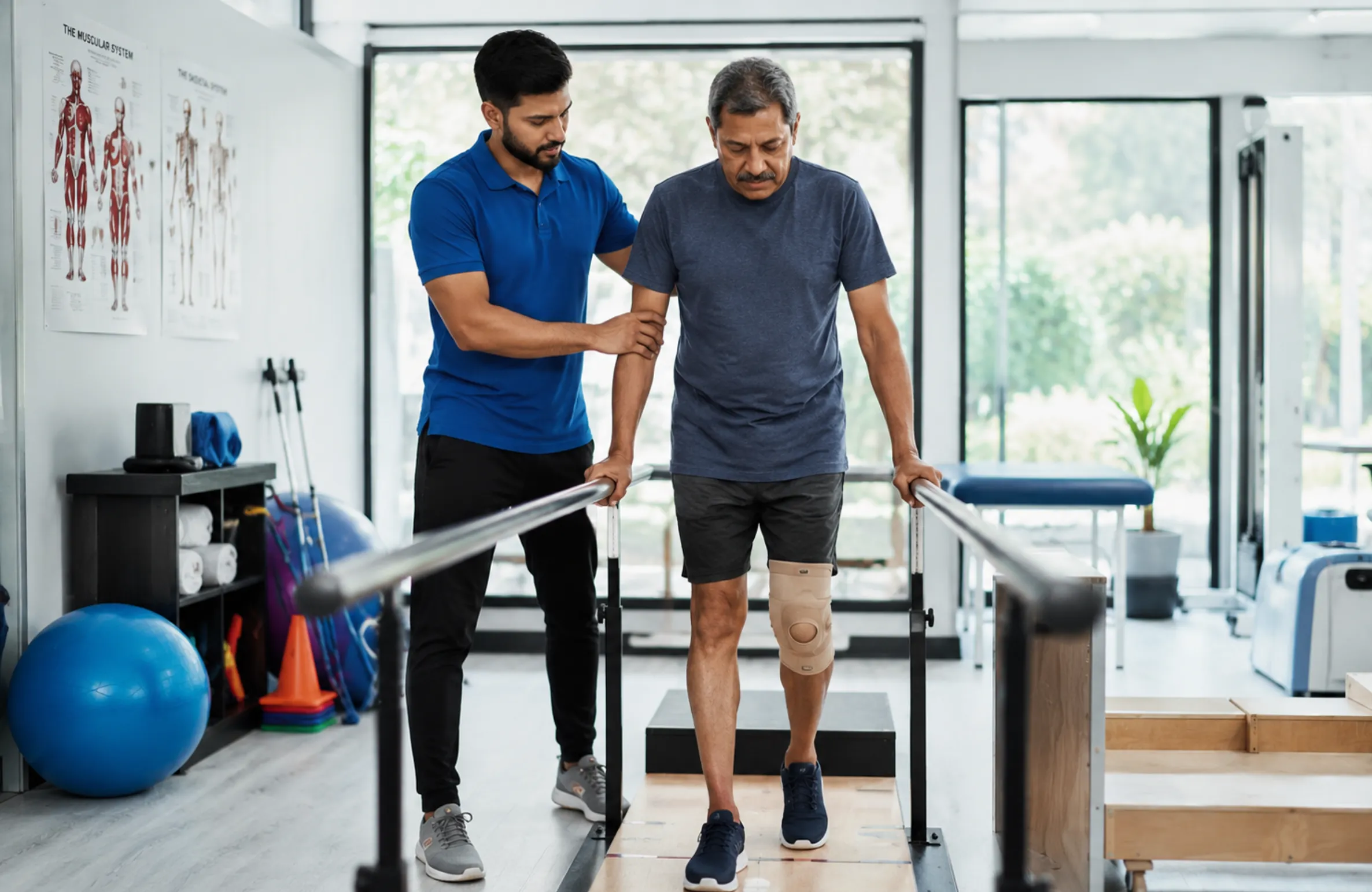
Physiotherapy is one essential component of rehabilitation. Full rehabilitation therapy is a broader, coordinated clinical programme.
While a physiotherapist addresses movement and physical function, a complete rehabilitation support programme also includes:
This multidisciplinary approach matters because recovery does not happen in one system at a time. A stroke affects movement, speech, cognition, and emotional regulation simultaneously. Post-surgery rehabilitation requires physical therapy alongside wound management, nutrition, and pain support. Addressing each of these in isolation consistently produces slower, less complete recovery than coordinated, patient-centered care.
Research summarised by the National Institutes of Health confirms that organised, multidisciplinary rehabilitation programmes lead to meaningful improvements in mobility, independence in daily activities, and overall participation in life. (Source: PMC, National Institutes of Health)
Stroke Rehabilitation: Stroke rehabilitation is one of the most time-sensitive areas of physical rehabilitation. The brain's neuroplasticity, its capacity to reorganise and adapt after injury, is greatest in the first three to six months following a stroke. Early physiotherapy within 24 to 48 hours of the event, followed by consistent rehabilitation therapy, is associated with significantly better outcomes in motor function, communication, and daily independence. Rehabilitation support for stroke patients who begin promptly consistently outperforms delayed care.
Post-Surgery Rehabilitation: Physiotherapy for faster recovery after surgery is supported by strong clinical evidence. Whether the procedure was orthopaedic, cardiac, abdominal, or spinal, the body needs structured post-operative rehabilitation services to heal well. Integrated physical therapy in the perioperative period reduces complications, shortens hospital length of stay, and improves return to functional independence. Patients who access physiotherapy for recovery early and consistently achieve better outcomes than those who delay.
Orthopedic Rehabilitation: Rehabilitation for orthopedic conditions covers a wide range: hip and knee replacements, fractures, rotator cuff repairs, arthritis-related functional decline, and spinal surgery. Each requires carefully graded physiotherapy treatment to restore joint mobility, muscle strength, flexibility, and safe movement patterns. The goal of orthopedic rehabilitation is not only recovery from the procedure, but returning the patient to full functional independence and preventing future injuries.
Neurological Rehabilitation: Neurological rehabilitation addresses conditions including Parkinson's disease, traumatic brain injury, multiple sclerosis, and spinal cord injury. It requires specialist rehabilitation specialists experienced in the specific progression of these conditions. Physical rehabilitation in this context focuses on maximising current function, maintaining mobility improvement for as long as possible, and adapting the rehabilitation program as the condition evolves.
Sports Injury Rehabilitation and Post Injury Rehabilitation: Physical therapy for sports injuries and post injury rehabilitation focuses on restoring strength, improving flexibility, correcting movement patterns, and returning the patient to full activity safely. Exercise therapy and manual therapy are both central to sports injury rehabilitation, alongside a personalised rehabilitation plan that accounts for the specific sport, injury type, and recovery goals.
Physiotherapy for Elderly Patients: Physiotherapy for elderly patients requires particular sensitivity. Even a brief hospitalisation can trigger rapid physical and cognitive decline in older adults. Mobility rehabilitation for elderly patients must account for multiple conditions happening simultaneously, balance the need to rebuild strength with the need to avoid overloading a system already under strain, and focus on fall prevention, gait training, and independence in daily activities.
Chronic Pain Treatment and Pain Management: Physiotherapy is one of the most effective interventions for chronic pain treatment. Through manual therapy, exercise therapy, mobility rehabilitation, and rehabilitation exercises tailored to the individual, physiotherapists help patients restore physical function and improve movement while managing pain in a way that does not rely solely on medication.
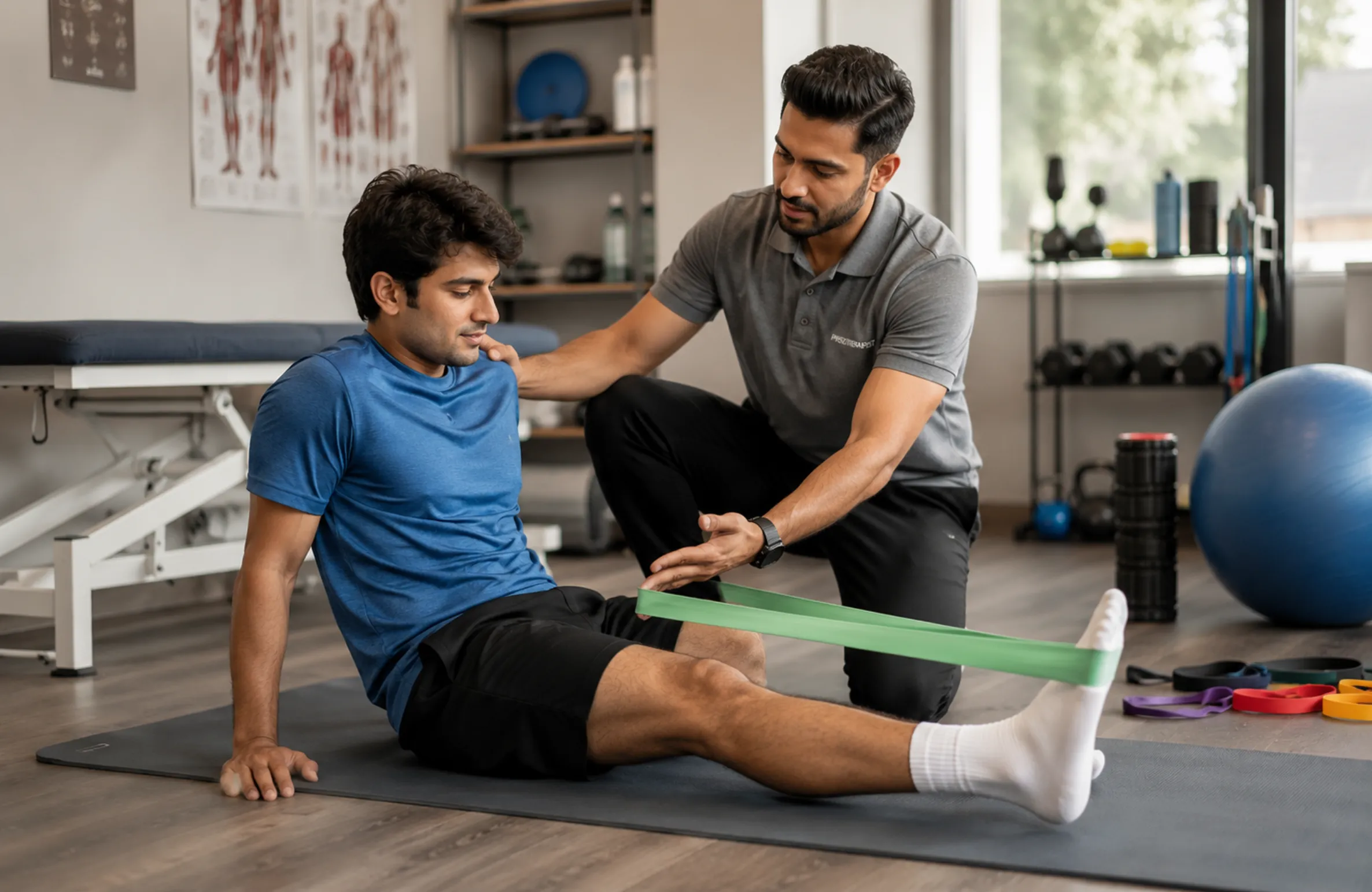
A personalised rehabilitation plan is not a fixed protocol applied uniformly. It is a living clinical document built around the individual patient, their specific condition, current capacity, and personal recovery goals.
An effective plan at a rehabilitation center includes:
It is patient-centered care in the truest sense, designed around the person, not the condition. The best outcomes in physiotherapy and rehabilitation come from programmes that are consistent, coordinated, and delivered by rehabilitation specialists who communicate well across disciplines.
Physiotherapy and rehabilitation support is most clearly needed when:
Recovery after injury, surgery, or serious illness is almost always possible with the right rehabilitation support in place. The gap between hospital discharge and returning to meaningful life does not have to be a period of uncertainty.
Physiotherapy addresses physical movement, strength, and mobility. Full rehabilitation is a multidisciplinary programme that also includes occupational therapy, speech therapy, nutrition, psychological support, and nursing care coordinated together for complete recovery.
Patients recovering from stroke, major surgery, orthopedic procedures, neurological disorders, cardiac events, sports injuries, or prolonged illness benefit from structured physiotherapy and rehabilitation support.
As early as medically appropriate. For stroke, within 24 to 48 hours. For post-surgical patients, early mobilisation with physiotherapy reduces complications and supports faster recovery.
A thorough clinical assessment, specific recovery goals, a combination of physiotherapy treatment and related therapies, and regular progress reviews adjusted to the patient's individual response.
Duration varies by condition and severity. Some patients see significant improvement within weeks. Complex neurological or surgical cases may require several months of consistent rehabilitation therapy.
Yes. Manual therapy, exercise therapy, and rehabilitation exercises are among the most effective approaches to chronic pain treatment, restoring physical function and improving movement over time.
If you would like to understand what comprehensive physiotherapy and rehabilitation looks like and whether it is right for your family member, the team at Care Convoy is available to walk you through it.
Speak With Our Care Team Today
