For families standing in a hospital corridor trying to understand what has just happened, the information available is often incomplete, clinical, and difficult to act on.
This guide explains what stroke recovery treatment in Hyderabad involves, what the clinical evidence says about timing, and what families should understand and look for when making decisions about post-stroke care.
A stroke occurs when blood supply to part of the brain is cut off, either by a clot blocking a vessel, which is called an ischemic stroke and accounts for approximately 87% of all strokes, or by a blood vessel rupturing and bleeding into the brain, which is called a haemorrhagic stroke.
Deprived of oxygen, brain cells begin to die within minutes. The functions those cells controlled—movement, speech, memory, swallowing, and emotional regulation—are disrupted or lost depending on where the stroke occurs and how severe it is.
What happens in the emergency room determines survival. What happens in the days, weeks, and months that follow determines how much life returns to normal.
The brain has the ability to reorganise itself after injury to form new neural connections that take over functions lost in the damaged area. This is called neuroplasticity, and it is the clinical foundation of all stroke recovery.
Neuroplasticity is not passive. It is activated by specific, repetitive, structured therapy. The more consistent and intensive the therapy, the more effectively the brain rewires itself. And this rewiring is most active in the first three to six months after a stroke, often called the golden window of recovery.
Stroke rehabilitation Hyderabad programmes that begin within 24 to 48 hours of medical stabilisation consistently produce significantly better outcomes in movement, speech, and daily independence than delayed care. This does not mean recovery is impossible after the golden window. Neuroplasticity continues for years. But the ceiling of what is achievable is highest when rehabilitation begins early—and that is the clinical reality every family deserves to understand clearly before making timing decisions.
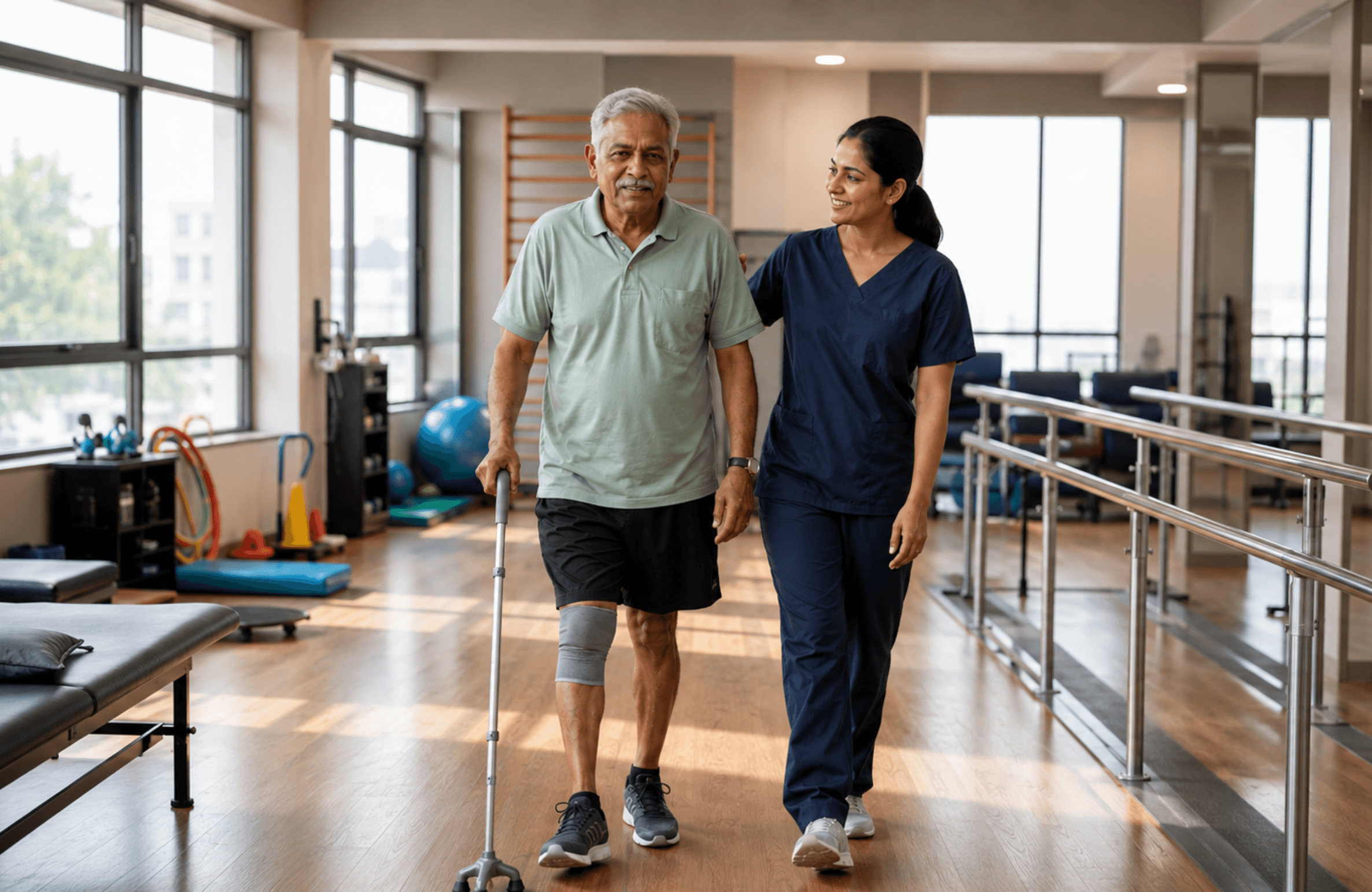
Physiotherapy after stroke is the clinical foundation of motor recovery. A neurological physiotherapist assesses the patient's current capacity—what they can do, what they cannot, and why—and builds a structured programme to progressively restore function.
Stroke physiotherapy Hyderabad programmes typically include:
Repetition is the mechanism. Each correctly performed movement strengthens the new neural pathway being formed. Inconsistent or infrequent therapy slows this process measurably and reduces the recovery ceiling.
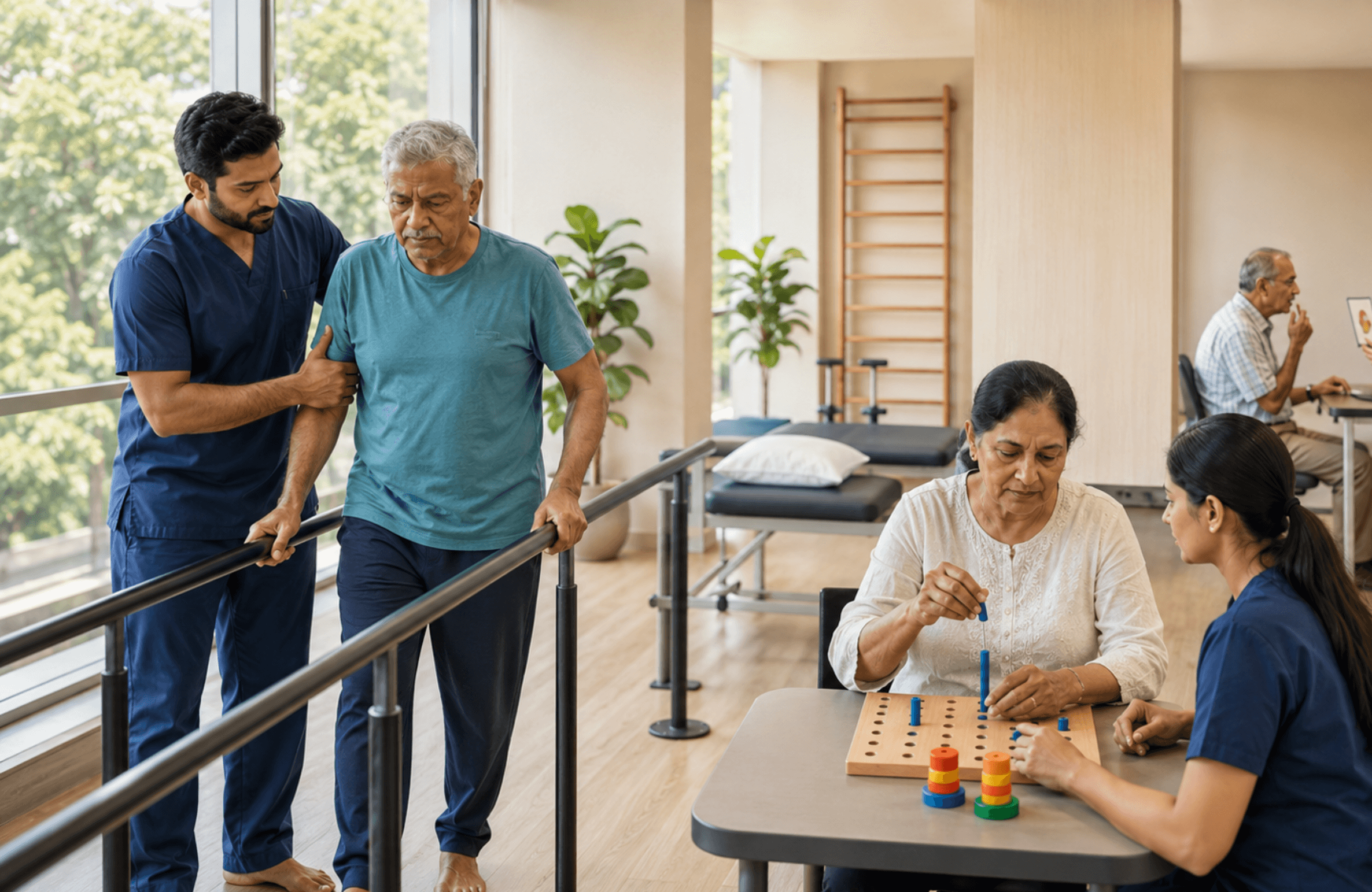
Stroke affects the whole person, not only the ability to walk. A complete post-stroke rehabilitation Hyderabad programme must address every system the stroke has disrupted.
Depending on the location and severity of the stroke, this may include:
A stroke recovery program in Hyderabad that addresses only physical movement will consistently produce slower and less complete recovery than one that coordinates physiotherapy with speech therapy, occupational therapy, nutritional support, and psychological care simultaneously.
These systems are not independent. A patient who is depressed engages less fully with physiotherapy. A patient with unaddressed dysphagia risks aspiration pneumonia that sets physical recovery back significantly. A patient who is nutritionally depleted cannot rebuild muscle regardless of therapy frequency.
This is why coordinated, multidisciplinary stroke therapy Hyderabad is not an additional service; it is the clinical standard for meaningful stroke recovery.
Speech therapy is among the most important and most frequently under-provided components of stroke rehabilitation. It addresses both communication and swallowing.
A speech and language therapist assesses the patient's ability to process and produce language, designs specific exercises to rebuild those neural pathways, and supports the family in communicating effectively with the patient throughout recovery. For patients with dysphagia, swallowing therapy reduces the risk of aspiration pneumonia and ensures the patient can receive adequate nutrition, which directly supports physical rehabilitation outcomes.
Any stroke recovery centre Hyderabad that does not include speech therapy as a routine component of its programme is not providing complete post-stroke care.
Post-stroke depression is among the most common and most overlooked consequences of stroke. It affects approximately one in three survivors and is caused by the neurological effects of the event, not only by the emotional weight of the experience.
When psychological wellbeing is not addressed as part of the stroke rehabilitation programme, physical recovery slows. Patients who are depressed engage less consistently with therapy, resist movement, and plateau earlier than their physical condition warrants.
Including structured psychological support in the stroke recovery program Hyderabad is clinically indicated and directly affects physical rehabilitation outcomes.
Families evaluating stroke rehabilitation centre Hyderabad options should ask:
A stroke recovery centre Hyderabad that can answer these questions specifically and clearly—not in general terms—is operating at the clinical standard stroke recovery requires.
Families play a documented role in stroke recovery outcomes. Research consistently shows that family engagement, understanding the therapy, maintaining consistent presence, and providing encouragement without pressure, improves patient progress.
What families can do most effectively:
The family's role is not to replace professional care. It is to remain an active, informed, and supportive presence throughout a process that is longer and more complex than most families initially expect.
Stroke recovery treatment is the structured rehabilitation process through which patients regain movement, speech, and independence after a stroke. How soon and how comprehensively it begins directly determines how much function returns.
As soon as the patient is medically stable, ideally within 24 to 48 hours of the stroke, when neuroplasticity is most active and recovery potential is highest.
A complete programme includes neurological physiotherapy, speech therapy, occupational therapy, nutritional rehabilitation, psychological support, and 24-hour medical supervision coordinated around the individual patient's deficits.
Yes. Neuroplasticity continues beyond the initial six-month window, and structured rehabilitation produces meaningful progress even when started later, though early intervention produces the best outcomes.
Yes. Speech therapy addresses swallowing function, cognitive communication, reading, and writing, all of which may be affected even when basic verbal speech appears intact.
Duration varies by severity, location, and consistency of rehabilitation. Meaningful recovery often continues for one to two years with structured, consistent therapy.
If you are currently making decisions about stroke rehabilitation for a family member, the team at Care Convoy is available to help you understand what structured, supervised post-stroke rehabilitation looks like and whether it is the right support for your situation.
Speak With Our Care Team Today
