These fears are understandable. And the answer, more often than families realise, lies in structured rehabilitation for mobility recovery.
Not in time. Not in willpower. In the right clinical support, delivered consistently, at the right stage of recovery. This guide explains how rehabilitation restores mobility and independence, who benefits most, and what a genuine programme looks like.
When clinicians talk about mobility recovery, they mean more than the ability to walk. True mobility recovery encompasses:
Full independence requires all of these. Rehabilitation for mobility is therefore not just about strengthening muscles and improving balance. It is about rebuilding a person's entire functional capacity and the confidence that accompanies it.
Understanding why mobility declines after hospitalisation helps explain why structured rehabilitation is necessary to restore it.
The body is not designed for prolonged inactivity. Bed rest, even for short periods causes measurable muscle loss, reduced cardiovascular fitness, joint stiffness, and neurological changes that impair balance and coordination. For elderly patients, even a week of hospitalisation can cause a degree of physical decline that takes months to recover from without structured support.
For patients who have had a stroke, brain injury, or neurological event, the picture is still more complex. The problem is not simply weakness, it is disrupted neural communication between the brain and the body. Restoring mobility in these patients requires not just physical rehabilitation but neurological rehabilitation, exploiting the brain's capacity for neuroplasticity to rebuild the pathways that control movement.
A quality rehabilitation centre in Banjara Hills addresses both dimensions, physical and neurological in a coordinated programme designed around the individual.

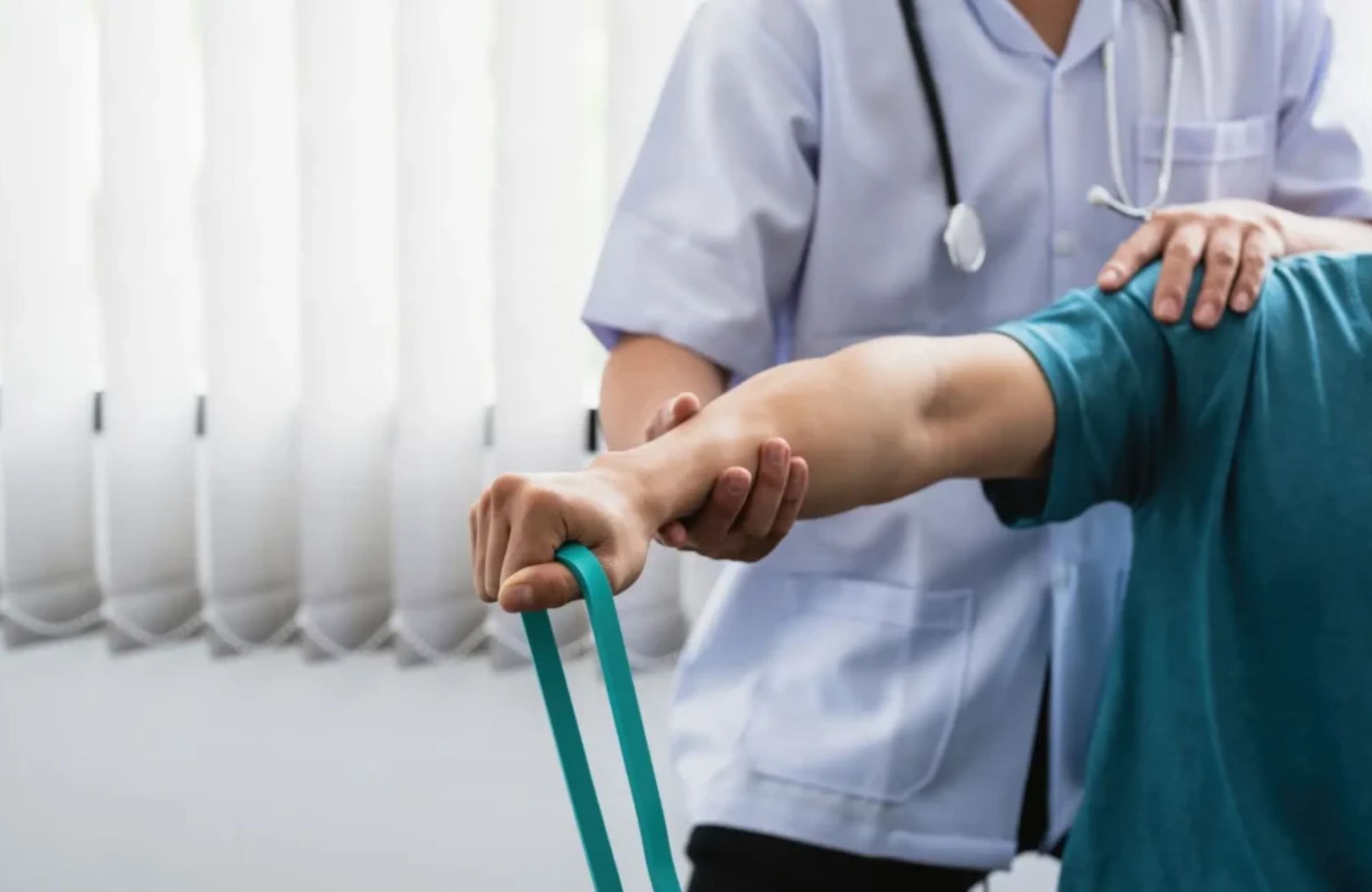
Physiotherapy for mobility improvement is the clinical foundation of mobility recovery. A specialist physiotherapist assesses the patient's current capacity across multiple dimensions like strength, range of motion, balance, gait pattern, fall risk, and functional independence and builds a progressive programme that challenges and expands that capacity over time.
The key word is progressive. Rehabilitation for mobility is not about doing the same exercises until discharge. It is about carefully calibrated, stepwise challenges that push the boundary of what the patient can do, safely and consistently until meaningful independence is restored.
For neurological patients, this physiotherapy is neurologically specific using techniques like task-specific training, gait retraining, functional electrical stimulation, and constraint-induced movement therapy to rebuild neural pathways alongside physical strength.
Mobility rehabilitation in Hyderabad at a comprehensive centre is not physiotherapy alone. Occupational therapy plays an equally critical role in translating physical gains into real functional independence.
Occupational therapists work with patients to relearn the daily activities that mobility underpins: dressing independently, preparing food, managing personal hygiene, and navigating the home safely. They also assess and advise on environmental modifications, removing fall hazards, recommending adaptive equipment, and ensuring the home the patient returns to is one they can live in safely.
This is the bridge between the rehabilitation centre and independent life at home and it is often the piece that makes the difference between a patient who returns home successfully and one who is readmitted within weeks.
Falls are one of the most significant threats to ongoing mobility recovery and one of the most preventable.
In India, falls are among the leading causes of injury-related hospitalisation in adults over 60. A fall during recovery does not just cause physical injury. It causes fear and fear of falling leads to reduced movement, which leads to further deconditioning, which leads to greater fall risk. It is a cycle that structured rehabilitation specifically aims to break.
Balance rehabilitation uses targeted exercises, postural training, vestibular rehabilitation where relevant, and progressive challenges to real-world environments, building both the physical stability and the psychological confidence that safe mobility requires.
Not every patient will return to the same level of mobility they had before their illness. For some patients, particularly those with significant neurological injuries, the goal of rehabilitation is not to restore pre-illness function exactly, but to achieve the maximum possible independence within realistic parameters.
This is where assistive technology and adaptive techniques become important. Walking aids, orthotic devices, wheelchairs configured for independence, and adaptive equipment for daily tasks are not signs of failure. They are tools that extend independence and learning to use them well is itself a rehabilitation goal.
Physical therapy and rehabilitation at a quality centre includes assessment for and training in assistive technology as an integral part of the programme, not an afterthought.

Stroke Recovery: The Indian Stroke Association estimates that up to 50% of stroke survivors experience significant ongoing disability but studies consistently show that structured rehabilitation dramatically improves functional outcomes, with many patients regaining independent mobility that would not have been achieved through rest alone.
Elderly Patients After Falls or Hospitalisation: Older patients have less physiological reserve, recover more slowly, and are at higher risk. Elderly patients who receive structured rehabilitation after falls or hospitalisation have significantly better mobility outcomes than those who do not, including reduced fall rates, improved walking speed, and greater functional independence at six and twelve months.
Post-Surgery Recovery: Following hip replacement, knee replacement, spinal surgery, or other major orthopaedic procedures, structured post-surgery mobility recovery is not optional. It is the mechanism through which the surgical outcome is realised. Physiotherapy begins within days of surgery, mobilising safely, building strength progressively, and working toward the independence the surgery was designed to restore.
Neurological Conditions: Neuro rehabilitation in Hyderabad for conditions including Parkinson's disease, multiple sclerosis, traumatic brain injury, and Guillain-Barré syndrome all address mobility as a core recovery domain. For Parkinson's patients, specialised physiotherapy using evidence-based approaches like LSVT BIG has been shown to improve stride length, walking speed, and balance, reducing fall risk.
This point deserves emphasis, because it is often underestimated.
Mobility rehabilitation in medically complex patients is not safe without appropriate clinical oversight. A patient with cardiac disease, poorly controlled blood pressure, a recent surgical wound, or neurological instability needs monitoring during physical rehabilitation, not just before and after.
A physiotherapist working in isolation, without immediate access to nursing oversight and physician support, is limited in how hard and how safely they can push a medically complex patient. Rehabilitation support services within a properly staffed centre, where physiotherapy, nursing, and medical care work in genuine coordination, allow rehabilitation to be more intensive, more responsive, and ultimately more effective.
This is the operational difference between a rehabilitation centre with 24/7 medical and nursing supervision and a physiotherapy clinic with visiting therapists. For patients recovering from serious illness, that difference is significant.
Recovery is not linear. This is one of the most important things families need to understand and one of the most important things a good rehabilitation team will tell them honestly from the outset.
Progress in mobility rehabilitation tends to follow a pattern: slow early gains as the body adjusts, followed by periods of faster progress, followed by plateaus, followed by renewed progress. There are days that feel discouraging. There are breakthroughs that feel extraordinary.
What sustains recovery through all of those phases is consistency of programme, of team, of environment, and of clinical expertise. That is what independence after rehabilitation care looks like in practice: not a single dramatic moment, but the cumulative result of structured, persistent, expert support.
The greatest period of neurological recovery occurs in the first three to six months after stroke and mobility rehabilitation is most impactful during this window. Many patients continue to make meaningful gains beyond six months with consistent structured rehabilitation.
Many do, with structured rehabilitation. The degree of recovery depends on the nature of the fall, any injuries sustained, the patient's pre-fall baseline, and how quickly structured rehabilitation begins. Early intervention consistently produces better outcomes than delayed or absent rehabilitation.
Mobility rehabilitation is a comprehensive programme within a broader rehabilitation centre, integrating physiotherapy, occupational therapy, medical supervision, and multidisciplinary coordination. Standard physiotherapy typically addresses the physical component in isolation.
Look for specialist physiotherapy expertise in the relevant condition, daily therapy sessions, occupational therapy alongside physiotherapy, 24/7 medical supervision, a fall-safe environment, and a personalised assessment-driven care plan.
The fear that a loved one will never walk properly again, never live independently again, never be themselves again, it does not have to be the outcome.
With structured, expert, medically supervised rehabilitation for mobility recovery, many patients achieve outcomes that families did not believe possible in those first difficult days after illness or surgery.
If you would like to understand what mobility rehabilitation looks like in practice and whether it is the right support for your loved one, the team at Care Convoy is ready to have that conversation with you.
Speak With Our Care Team Today
